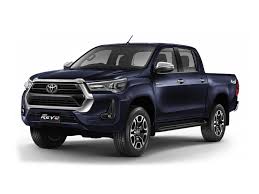
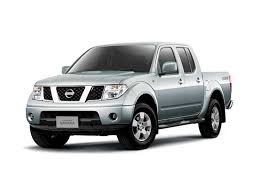
Great comparison between two cars.oyota Hilux vs Nissan Navara: Midsize Pickup Engineering and Utility
The global midsize pickup truck sector is anchored by two foundational platforms built for distinct operational environments: the Toyota Hilux and the Nissan Navara. While both vehicles cater to heavy utility, commercial logistics, and off-road driving, their engineering profiles diverge significantly in suspension layout and powertrain priorities. The Toyota Hilux focuses on heavy-duty fleet durability and high residual value, while the Nissan Navara emphasizes everyday ride compliance and ergonomic utility.
Powertrain Layout and Performance Metrics
Under the hood, standard configurations are driven by heavy-duty four-cylinder turbodiesel platforms designed for high torque delivery at low RPM ranges.
Toyota Hilux: Higher-tier variants feature a 2.8-liter four-cylinder turbodiesel engine yielding up to 201 horsepower and 500 Nm of torque, distributed through either a 6-speed manual or 6-speed automatic transmission. Base fleet options utilize a 2.4-liter turbodiesel unit or a 2.7-liter naturally aspirated petrol configuration.
Nissan Navara: The platform leans on a 2.5-liter four-cylinder turbocharged engine or a 2.3-liter twin-turbodiesel unit depending on regional availability. Top-spec variants deliver 188 horsepower and 450 Nm of torque paired with a 7-speed automatic transmission, utilizing a broader gear ratio spread to manage engine load.
Suspension and Chassis Dynamics
The structural configuration of the rear axle defines the driving characteristics of both pickups. The Toyota Hilux employs a traditional over-slung rear leaf spring suspension setup, maximizing structural resilience under peak payload conditions. Conversely, the Nissan Navara differentiates itself by using an available five-link coil spring rear suspension system, providing superior axle articulation and a significantly smoother ride profile when the cargo bed is unladen.