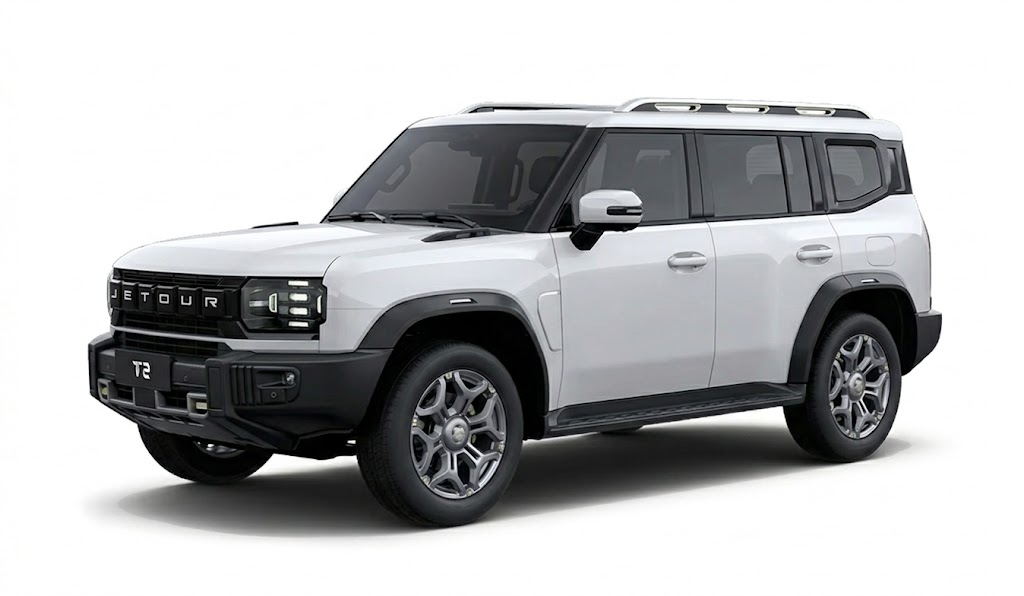
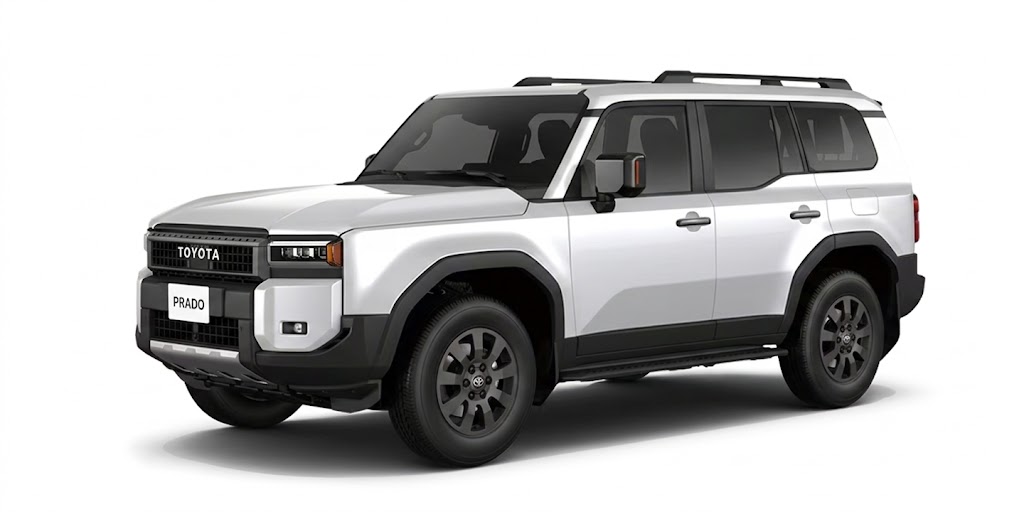
Jetour T2 vs Toyota Land Cruiser Prado: Heavy-Duty SUV
The off-road SUV segment features a clear transition from heavy mechanical platforms to high-technology, unit-body structures equipped with intelligent drivetrain distribution. This technical analysis reviews the mechanical configurations, architectural differences, and regional operating metrics of the Jetour T2 and the Toyota Land Cruiser Prado. While both vehicles cater to drivers seeking all-terrain capability and daily urban usability, their core engineering foundations define distinct driving profiles.
Performance & Mechanical Infrastructure
The primary differentiation between these two vehicles lies in their structural platforms and transmission logic:
Jetour T2: This configuration utilizes a modern unibody chassis built for high structural rigidity and weight reduction. Power is driven by a 2.0-liter turbocharged four-cylinder engine paired with a rapid-shifting 7-speed dual-clutch transmission, optimizing fuel consumption metrics and mid-range torque delivery during highway cruising.
Toyota Land Cruiser Prado: This platform continues on a traditional body-on-frame architecture, prioritizing heavy axle articulation and mechanical torque preservation under continuous load. It couples a 2.4-liter turbocharged four-cylinder engine to a wide-ratio 8-speed automatic gearbox built to handle deep sand extraction.
Dimensions and Off-Road Geometry
Clearance metrics dictate off-road capability across regional terrains. The Jetour T2 features an aggressive rear departure angle due to its compact bumpers and short body overhangs, minimizing the risk of tail damage on steep descents. Conversely, the Toyota Land Cruiser Prado leverages a superior front approach angle and exceptional mechanical suspension travel, allowing it to climb steep rocky inclines and navigate deep ruts without contacting front body panels.