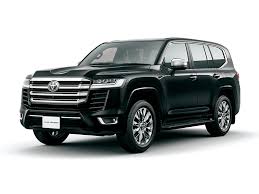
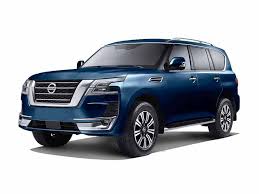
Toyota Land Cruiser vs Nissan Patrol: Heavy-Duty SUV Comparison
The rivalry between these two heavyweights has entered a new era. With the launch of the all-new Nissan Patrol Y63, both manufacturers have officially transitioned to twin-turbocharged V6, prioritizing performance and technical efficiency over the traditional V8 architecture.
The premium full-size SUV segment is anchored by two foundational body-on-frame platforms engineered for extreme terrain traversal and passenger transit: the Toyota Land Cruiser and the Nissan Patrol. Both vehicles occupy an essential space in regional automotive markets, serving as reliable choices for off-road exploration, heavy-duty towing, and VIP fleet logistics. While the Toyota Land Cruiser prioritizes weight reduction, structural rigidity, and low-end torque deployment, the Nissan Patrol focuses on maximum engine output, extended wheelbase volume, and road-smoothing independent suspension configurations.
Powertrain Engineering and Displacement Profiles
Modern iterations of these SUVs mark a complete transition from naturally aspirated legacy V8 configurations to advanced high-efficiency forced induction platforms:
Toyota Land Cruiser: The flagship engine architecture utilizes a 3.5-liter twin-turbocharged petrol V6 unit. This setup optimizes exhaust gas flow to produce high torque capacity at low engine revolutions, sending power through a wide-ratio 10-speed automatic gearbox built to maintain momentum across challenging sand or rock environments.
Nissan Patrol: The latest platform relies on a 3.5-liter twin-turbocharged V6 powertrain option, shifting away from older high-displacement configurations. It delivers power via a highly responsive 9-speed automatic transmission, utilizing electronic wastegate management to provide linear acceleration and robust highway overtaking characteristics.
Suspension Engineering and Off-Road Systems
Chassis design highlights distinct handling properties between the two vehicles. The Toyota Land Cruiser leans on its Electronic Kinetic Dynamic Suspension System (E-KDDS), which dynamically locks or frees the front and rear stabilizer bars to provide maximum wheel articulation off-road while reducing body lean on paved highways. The Nissan Patrol incorporates an advanced Hydraulic Body Motion Control (HBMC) setup or a standard double-wishbone independent configuration across both axles, prioritizing high-speed desert stability and isolating the passenger cabin from continuous surface vibrations.
Performance & Drivetrain
The Nissan Patrol Y63 leads the power race with its 3.5L Twin-Turbo V6, producing 425 hp and 700 Nm of torque, paired with a refined 9-speed automatic transmission. The Toyota Land Cruiser 300 counters with its proven 3.5L Twin-Turbo V6, delivering 409 hp and 650 Nm of torque through a 10-speed automatic. While the Patrol offers slightly more raw power, the Land Cruiser 10-speed gearbox is often cited for its smooth power delivery in mixed driving conditions.
Dimensions & Interior Space
In terms of pure size and presence, the Patrol Y63 is the larger vehicle. It is approximately 190mm longer and 50mm wider than the Land Cruiser 300, providing a significant advantage in cabin volume.
Nissan Patrol: Offers an 8-seat configuration with a superior 3,075mm wheelbase.
Toyota Land Cruiser: Features a 7-seat layout with a 2,850mm wheelbase, making it more maneuverable in tight urban environments.
Technology & Features
The Patrol Y63 has raised the bar for cabin technology, featuring dual 14.3-inch connected displays and an available Klipsch 12-speaker premium audio system. The Land Cruiser 300 maintains a more functional approach with a 12.3-inch touchscreen and a 14-speaker JBL system. While the Toyota focuses on ergonomic reliability and physical controls, the Nissan leans into a luxury-forward experience with features like massage seats and biometric climate control.
Off-Road Prowess
Both vehicles remain top-tier off-roaders with specialized hardware:
Land Cruiser 300: Known for its Multi-Terrain Select and exceptional wheel articulation, it remains the preferred choice for technical, rocky trails and long-term durability.
Nissan Patrol Y63: Excels in high-speed desert driving, supported by its Adaptive Air Suspension (on higher trims) which can increase ground clearance by up to 70mm for dune navigation.