Toyota Hilux vs Nissan Navara

Share this page:

Great comparison between two cars.oyota Hilux vs Nissan Navara: Midsize Pickup Engineering and Utility

The global midsize pickup truck sector is anchored by two foundational platforms built for distinct operational environments: the Toyota Hilux and the Nissan Navara. While both vehicles cater to heavy utility, commercial logistics, and off-road driving, their engineering profiles diverge significantly in suspension layout and powertrain priorities. The Toyota Hilux focuses on heavy-duty fleet durability and high residual value, while the Nissan Navara emphasizes everyday ride compliance and ergonomic utility.

Powertrain Layout and Performance Metrics

Under the hood, standard configurations are driven by heavy-duty four-cylinder turbodiesel platforms designed for high torque delivery at low RPM ranges.

  • Toyota Hilux: Higher-tier variants feature a 2.8-liter four-cylinder turbodiesel engine yielding up to 201 horsepower and 500 Nm of torque, distributed through either a 6-speed manual or 6-speed automatic transmission. Base fleet options utilize a 2.4-liter turbodiesel unit or a 2.7-liter naturally aspirated petrol configuration.

  • Nissan Navara: The platform leans on a 2.5-liter four-cylinder turbocharged engine or a 2.3-liter twin-turbodiesel unit depending on regional availability. Top-spec variants deliver 188 horsepower and 450 Nm of torque paired with a 7-speed automatic transmission, utilizing a broader gear ratio spread to manage engine load.

Suspension and Chassis Dynamics

The structural configuration of the rear axle defines the driving characteristics of both pickups. The Toyota Hilux employs a traditional over-slung rear leaf spring suspension setup, maximizing structural resilience under peak payload conditions. Conversely, the Nissan Navara differentiates itself by using an available five-link coil spring rear suspension system, providing superior axle articulation and a significantly smoother ride profile when the cargo bed is unladen.
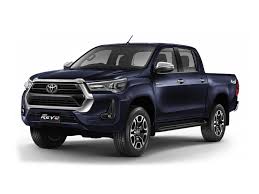
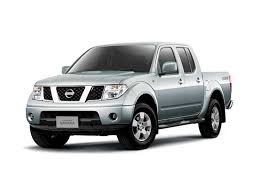
Toyota Hilux

Car Overview

Make
Toyota
Model
Hilux
Body Type
Pick-up
Year
2025
Condition
Brand New

Specifications

Engine Capacity
3200 cc

Location

Additional

Engine Configuration
2.8-liter Inline-4 Turbodiesel
Engine Displacement
2755 cc
Maximum Power Output
201 hp
Transmission Type
6-speed Automatic / 6-speed Manual
Wheelbase Length
3085 mm
Rear Suspension Setup
Rigid Axle with Heavy-Duty Leaf Springs
Maximum Payload Rating
1000 kg to 1110 kg
Braked Towing Capacity
3500 kg
Nissan Navara

Car Overview

Make
Nissan
Model
NP300 / Navara
Body Type
Pick-up
Year
2025
Condition
Brand New

Specifications

Engine Capacity
3400 cc

Location

Additional

Engine Configuration
2.5-liter Inline-4 Turbodiesel
Engine Displacement
2488 cc
Maximum Power Output
188 hp
Transmission Type
7-speed Automatic / 6-speed Manual
Wheelbase Length
3150 mm
Rear Suspension Setup
Five-Link Rigid Axle with Coil Springs
Maximum Payload Rating
1000 kg to 1100 kg
Braked Towing Capacity
3500 kg

Final Verdict: Operational Suitability

  • Select the Toyota Hilux if your usage pattern prioritizes maximum payload durability, severe commercial utilization, and superior asset value retention over time. It represents a rigid mechanical infrastructure optimized for continuous fleet operations.

  • Select the Nissan Navara if you require a dual-purpose vehicle that balances commercial hauling capabilities with passenger comfort. The longer wheelbase (3150 mm) combined with the multi-link coil rear axle layout delivers predictable road manners for daily transport.

Frequently Asked Questions: Toyota Hilux vs Nissan Navara

The Nissan Navara five-link rear coil spring suspension minimizes the harsh, bouncy ride behavior typical of unladen utility pickups by isolating vertical chassis movements. It maintains constant tire contact patches on uneven terrain, yielding better rear traction. The Toyota Hilux leaf spring layout, while firmer when empty, provides absolute structural stability with less mechanical complexity under heavy weight distribution.

The Toyota Hilux 2.8-liter turbodiesel variant features an engine displacement of 2755 cc, generating up to 201 horsepower. The Nissan Navara 2.5-liter turbodiesel variant carries an engine displacement of 2488 cc, outputting 188 horsepower. The larger capacity engine in the Hilux yields an additional 50 Nm of torque.

Yes, when equipped with appropriate heavy-duty tow bars and trailer braking systems, both the Toyota Hilux and the Nissan Navara achieve a matching maximum braked towing capacity of 3500 kg. However, engine cooling properties and specific transmission gear ratios vary between individual regional trim distributions.

The Toyota Hilux features an approach angle of approximately 29 to 31 degrees and a departure angle of 26 degrees, depending on whether factory steel bumpers or decorative plastic trims are fitted. The Nissan Navara delivers an approach angle of 31 degrees and a departure angle of 26 degrees, placing both vehicles on a highly equal level regarding raw off-road geometry.