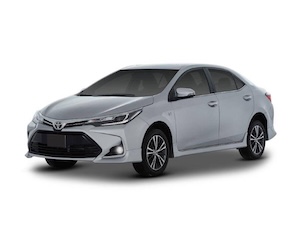
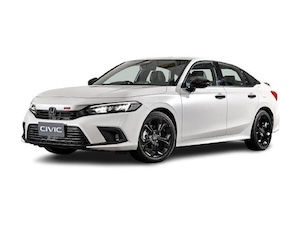
Toyota Corolla vs Honda Civic: Compact Sedan Engineering and Benchmark Dynamics
The global compact sedan segment is structurally defined by the historical development of two foundational Japanese platforms: the Toyota Corolla and the Honda Civic. Both vehicles serve as global standard-bearers for commuter efficiency, everyday reliability, and competitive operational costs. However, their modern product designs follow distinct engineering paths. The Toyota Corolla emphasizes absolute drivetrain simplicity, high thermal efficiency, and soft cabin isolation, whereas the Honda Civic focuses on premium chassis responsiveness, low-slung seating geometry, and extended wheelbase dimensions.
Powertrain Engineering and Natural Aspiration
Under the hood, base configurations rely on highly optimized four-cylinder petrol engine layouts, utilizing precise variable valve timing architecture to balance emission targets with on-road performance:
Toyota Corolla: Standard variations leverage a robust 2.0-liter naturally aspirated four-cylinder unit. This configuration maximizes mechanical reliability by reducing auxiliary plumbing, routing power through a specialized continuously variable transmission equipped with a physical launch gear to ensure immediate traction off the line.
Honda Civic: The core engine setup utilizes an efficient 1.5-liter turbocharged configuration or a 2.0-liter naturally aspirated inline-four engine depending on market localization. Power delivery focuses on mid-range torque availability, distributing output via an electronically managed transmission system tuned to mimic standard stepped gear ratios under heavy throttle load.
Chassis Construction and Ride Behavior
Suspension geometry maps out the core handling differences between these daily commuters. The Honda Civic adopts a sporting stance, featuring an elongated wheelbase and a multi-link rear suspension arrangement that reduces body sway during fast cornering. The Toyota Corolla relies on a highly compliant suspension setup designed to damp out road ripples, absorbing jagged surface transitions smoothly to maintain a relaxed, quiet environment across urban corridors.