Mercedes S-Class vs Audi A8

Share this page:

Mercedes-Benz S-Class vs Audi A8: Executive Performance

The flagship luxury sedan segment presents two distinct approaches to high-end automotive engineering: the Mercedes-Benz S-Class and the Audi A8. While both vehicles cater to executive transit and prioritize rear-passenger comfort, their core identities stem from different development priorities. The Mercedes-Benz S-Class prioritizes tech-forward cabin isolation and advanced digital integration, whereas the Audi A8 relies heavily on understated aesthetic profiles and mechanical traction systems.

Powertrain and Mechanical Drivetrains

Under the hood, base setups feature 3.0-liter turbocharged inline-six or V6 power units equipped with 48V mild-hybrid assistance.

  • Mercedes-Benz S-Class: The standard inline-six engine provides 442 horsepower paired with a 9-speed automatic transmission. Power is distributed via the 4MATIC all-wheel-drive system, which emphasizes high-speed stability and linear acceleration.

  • Audi A8: The standard V6 configuration delivers 335 horsepower routed through an 8-speed Tiptronic transmission. It utilizes the mechanical Quattro permanent all-wheel-drive platform, offering a rear-biased torque split that yields distinct handling dynamics in low-traction environments.

Chassis Engineering and Ride Profile

Suspension design marks a primary differentiator between these two highway cruisers. The Audi A8 employs an available predictive active air suspension system that reads the road layout via front-facing cameras, pre-conditioning individual wheels for surface irregularities. The Mercedes-Benz S-Class uses its E-Active Body Control system, countering body roll, pitch, and lift dynamically to maintain a completely level cabin plane during cornering and braking.
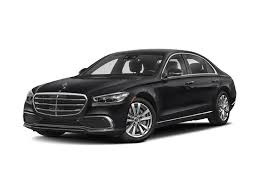
Mercedes S-Class

Car Overview

Make
Mercedes-Benz
Model
S Class
Body Type
Luxury Sedan
Year
2025

Specifications

Cylinders
6 Cylinders
Seating Capacity
5

Location

Additional

Engine Configuration
3.0-liter Turbocharged Inline-6
Engine Displacement
2999 cc
Horse Power
442 HP
Mild-Hybrid Integration
48V EQ Boost Assistance
Infotainment Hardware
12.8-inch portrait-oriented OLED screen
Control Layout Strategy
Digital-first MBUX interface integration
Wheelbase
3216 mm
Rear Legroom
1074 mm
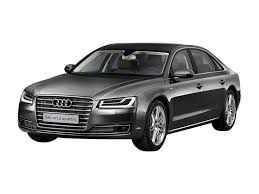
Audi A8

Car Overview

Make
Audi
Model
A8
Body Type
Luxury Sedan
Year
2025

Specifications

Cylinders
6 Cylinders
Seating Capacity
5

Location

Additional

Engine Configuration
3.0-liter Turbocharged V6
Engine Displacement
2995 cc
Horse Power
335 HP
Mild-Hybrid Integration
48V Mild Hybrid (MHEV) Architecture
Infotainment Hardware
Dual-stacked MMI haptic screens
Control Layout Strategy
Tactile-focused ergonomic physical integration
Wheelbase
3127 mm
Rear Legroom
1125 mm

Comparative Breakdown: Cabin Volume and Tech Infrastructure

Beyond raw mechanical specifications, the choice between these executive saloons depends heavily on your preferred usage pattern—whether you intend to drive or be chauffeured.

Structural Dimensions and Rear Comfort

The Mercedes-Benz S-Class features a longer wheelbase (3216 mm) compared to the standard Audi A8 (3127 mm), resulting in superior total passenger volume. However, in long-wheelbase variants (A8 L), Audi optimizes floorboard packaging to offer highly competitive rear legroom measuring 1125 mm, marginally outpacing the standard S-Class rear space.

Interface and Controls

Inside the cockpit, the user interaction strategies diverge completely:

  • The Mercedes-Benz S-Class places its central control interface inside a 12.8-inch portrait-oriented OLED touchscreen running the MBUX platform, minimizing physical switchgear in favor of biometric scanning and voice control.

  • The Audi A8 uses a dual-screen MMI touch response configuration split across the dashboard. It retains acoustic and haptic feedback profiles to simulate the physical operation of buttons, minimizing driver distraction.

Final Verdict: Strategic Alignment

  • Select the Mercedes-Benz S-Class if your priority is top-tier tech integration, superior base engine horsepower (442 hp), and maximum brand equity in the executive tier. It functions as an ideal mobile office for long-distance chauffeured commutes.

  • Select the Audi A8 if you prefer an understated, low-profile exterior footprint, superior mechanical AWD capabilities for adverse weather, and an interior layout that balances digital screen space with structural tactile feedback.

Frequently Asked Questions: Mercedes-Benz S-Class vs Audi A8

The Mercedes-Benz 4MATIC system utilizes an electronically controlled multi-plate clutch system integrated into the transmission, prioritizing rapid, proactive torque distribution to individual wheels based on slip sensors. The Audi Quattro system on the A8 employs a mechanical self-locking center differential that defaults to a permanent 40:60 front-to-rear power split, providing highly consistent and predictable handling without waiting for wheel slippage to trigger engagement.

The base inline-six engine in the Mercedes-Benz S-Class achieves marginally better efficiency numbers, yielding approximately 20 MPG in city driving and 29 MPG on highway corridors. The Audi A8 V6 configuration delivers an estimated 19 MPG city and 27 MPG highway. Both vehicles utilize mild-hybrid infrastructure to optimize stop-start engine transitions.

Both manufacturers provide multi-contour rear seating packages complete with cooling, ventilation, and pneumatic massage functions. The Audi A8 stands out with an available heated foot massage panel deployed from the back of the front passenger seat. The Mercedes-Benz S-Class compensates with active ambient cabin lighting linked to occupant safety alerts, alongside neck-warming pillows integrated directly into the rear headrests.

The Audi A8 features a larger cargo compartment volume, offering 505 liters of trunk space. The standard Mercedes-Benz S-Class cargo area provides less utility, balancing out at roughly 305 to 550 liters depending on the selected rear-powertrain configuration and whether plug-in hybrid battery packs occupy lower floorboard segments.