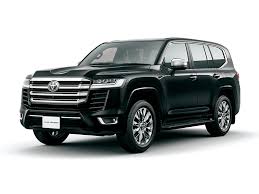
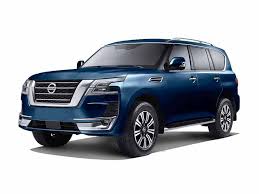
The Toyota Land Cruiser retains its traditional 2850 mm wheelbase dimension. This shorter footprint provides an exceptional breakover angle, reducing the risk of the vehicle high-centering on sharp obstacles or sand dunes. The Nissan Patrol utilizes a longer 3075 mm wheelbase layout, which provides increased tracking stability at high speeds on straight highways and allows for a larger overall cabin volume.
نظرة عامة على السيارة
المواصفات
الموقع
إضافي
نظرة عامة على السيارة
المواصفات
الموقع
إضافي
تويوتا لاند كروزر |
نيسان باترول |
|
|---|---|---|
نظرة عامة على السيارة |
||
| الشركة المصنعة | تويوتا | نيسان |
| الموديل | لاند كروزر | باترول |
| نوع الهيكل | سيارة رياضية متعددة الاستخدامات | سيارة رياضية متعددة الاستخدامات |
المواصفات |
||
الموقع |
||
إضافي |
||
| Engine Configuration | 3.5-liter Twin-Turbo V6 | 3.5-liter Twin-Turbo V6 |
| Engine Displacement | 3444 cc | 3498 cc |
| Maximum Power Output | 409 hp | 425 hp |
| Wheelbase Length | 2850 mm | 3075 mm |
| Chassis Platform Type | TNGA-F Body-on-Frame | Y63 Body-on-Frame |
| Standard Fuel Capacity | 110 liters (Dual Tank) | 140 liters |
Frequently Asked Questions: Toyota Land Cruiser vs Nissan Patrol
The twin-turbocharged V6 petrol engine in the Toyota Land Cruiser features an engine displacement of 3444 cc, producing 409 horsepower. The twin-turbocharged V6 petrol engine in the newer Nissan Patrol series operates with an engine displacement of 3498 cc, generating 425 horsepower. This variations in capacity yields slightly different power curves across mid-range engine speeds.
The Nissan Patrol provides a single large fuel capacity setup holding up to 140 liters of fuel. The Toyota Land Cruiser uses a dual-tank configuration that combines main and sub-tanks to offer a total capacity of 110 liters. Both setups are engineered to ensure long-distance travel capabilities through remote regions where fuel stations are scarce.
The Electronic Kinetic Dynamic Suspension System inside the Toyota Land Cruiser relies on electronic sensors to read road conditions. When the vehicle detects rough terrain at low speeds, it electronically releases the front and rear stabilizer bars. This lets the wheels drop lower and lift higher independently to stay in contact with uneven ground, re-engaging automatically at high speeds to keep the car steady around tight curves.